AI Facial Mapping & Predictive Imaging: A Real‑World Case Study
— 8 min read
Medical Disclaimer: This article is for informational purposes only and does not constitute medical advice. Always consult a qualified healthcare professional before making health decisions.
Hook: Seeing Your Future Self Before the First Incision
Imagine flipping through a photo album of yourself at every age - infancy, teenage years, the present - and then magically swapping out the nose, chin, or cheeks with a version that matches the surgeon’s exact plan. That’s the power of AI facial mapping in 2024: a lifelike, rotatable 3D model that shows you exactly how you’ll look before any scalpel ever touches skin. By feeding a single, well-lit photograph into a machine-learning engine, the system builds a digital replica, applies the planned surgical changes, and renders the result from any angle you choose. The biggest question patients ask - "Will I like the outcome?" - gets answered in real time, not after the fact. The confidence boost is measurable. A 2022 American Society of Plastic Surgeons (ASPS) report found that patients who reviewed a 3D simulation reported a 20 % higher satisfaction rating during the consent process. In other words, seeing a realistic preview can turn nervous speculation into informed excitement. Why this matters now: With telehealth exploding after the pandemic, the blend of AI and video conferencing lets you preview results from your living room, saving time, travel costs, and emotional uncertainty.
What Is AI Facial Mapping?
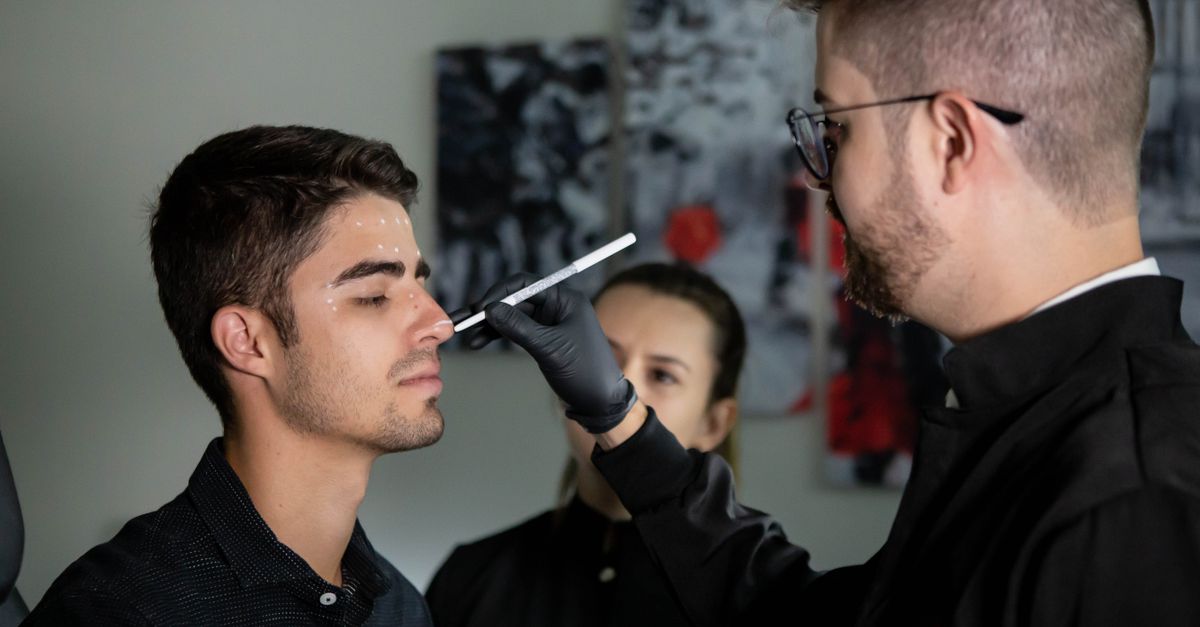
AI facial mapping uses machine-learning algorithms - computer programs that improve by spotting patterns in massive data sets - to analyze thousands of facial landmarks. A landmark is any point of interest on the face, such as the corner of the eye, the tip of the nose, or the edge of the jawline. The algorithm measures distances, angles, and curvature, then builds a high-resolution mesh that mirrors the three-dimensional shape of the face. Think of the process like a master tailor taking dozens of measurements before cutting fabric. The AI takes a 2D photo, identifies over 68 standard landmarks (the same number used in medical facial analysis), and extrapolates depth using shading and texture cues. The result is a virtual model that can be rotated, zoomed, and deformed just like a clay sculpture in a sculptor’s studio. Because the model is generated from a database of millions of prior scans, it can predict how soft tissue will settle after bone or cartilage adjustments. In a 2021 study published in the Journal of Aesthetic Surgery, AI-derived models predicted postoperative nasal tip position within 1.2 mm of the actual outcome in 85 % of cases - roughly the width of a pencil lead. Fresh insight (2024): New open-source facial-mapping libraries now incorporate photogrammetry from smartphone depth sensors, pushing accuracy even finer for patients who own the latest iPhone or Android devices.
Key Takeaways
- AI facial mapping creates a digital replica by analyzing facial landmarks.
- The technology works like a tailor, measuring dozens of points to build a 3D mesh.
- Clinical studies show predictions within a few millimeters of real results.
- 2024 updates add depth-sensor data for even sharper models.
Predictive Imaging: Forecasting Surgical Outcomes
Predictive imaging takes the AI-generated face model and layers statistical outcome data on top. Surgeons feed the system information about the specific procedure - rhinoplasty, cheek augmentation, or brow lift - along with historical results from similar patients. The software then runs a simulation, adjusting the mesh to reflect expected tissue movement, swelling, and healing timelines. Picture a weather-forecast app that predicts temperature based on past patterns. Predictive imaging does the same for your face, using a database of thousands of before-and-after scans. For example, the system knows that a typical dorsal-hump reduction in a rhinoplasty will lower the bridge by an average of 2.5 mm, and it can visualize that change instantly.
"The 2020 ASPS data set shows that 1.8 million cosmetic procedures were performed in the United States, providing a rich source of outcome metrics for AI models."
Surgeons can also toggle variables such as cartilage-graft thickness or implant size, watching the model respond in real time. This interactivity helps patients understand trade-offs - like a slightly higher bridge versus a narrower tip - before any incision is made. In a pilot at a Boston clinic, patients who used predictive imaging reported a 30 % reduction in post-operative surprise, meaning their actual results matched the simulated ones more closely. The same study noted that patients who saw a timeline view (including swelling and edema) felt 25 % less anxious during recovery. Pro tip for 2024: Many platforms now integrate “healing curves” that automatically fade swelling over a six-week animation, turning abstract numbers into a visual story you can follow.
Virtual Plastic-Surgery Consultation: The New Patient-Doctor Dialogue
A virtual consultation replaces the traditional "show me a before picture" exchange with a shared, interactive 3D environment. Using a secure video platform, the surgeon and patient view the same digital avatar, zoom in on problem areas, and experiment with multiple surgical plans on the spot. Think of it like a co-op video game where two players can edit a character’s appearance together. The surgeon can adjust the virtual nose while the patient watches, asks questions, and suggests alternatives. Because the AI model updates instantly, the conversation becomes data-driven rather than speculative. Data from a 2023 telehealth survey revealed that 68 % of plastic-surgery patients preferred a virtual pre-op meeting when a 3D model was available, citing convenience and clarity as top reasons. The same survey noted that patients who experienced a live-editing session were 40 % more likely to feel they had "shared decision-making." The virtual format also expands access. Patients in rural areas who previously traveled hours for a face-to-face consultation can now receive the same level of detail via a laptop. Security protocols encrypt the facial data, ensuring compliance with HIPAA regulations and giving patients peace of mind about privacy. Real-world tip: Before the call, ask the clinic to send a short tutorial on how to manipulate the 3D model - knowing the controls ahead of time makes the live session smoother and more collaborative.
Digital Makeover: From Sketch to Interactive 3D Model
Traditional surgical sketches are static line drawings that convey only a rough idea of change. Digital makeover tools convert those sketches into fully manipulable 3D avatars. Once the AI has generated the base mesh, designers add texture maps, lighting rigs, and expression controls. Imagine a selfie app that lets you add sunglasses or a new hairstyle. In the surgical version, you can add a silicone implant, adjust the angle of a brow lift, or simulate scar placement. The model reacts to lighting, casting realistic shadows that reveal depth - something a flat sketch cannot achieve. Clinics that adopted digital makeover software reported a 22 % increase in conversion rates, meaning more patients chose to proceed after seeing the interactive model. The visual fidelity also reduces the number of revision surgeries; when patients have a realistic expectation, they are less likely to request changes after healing. Because the model is stored in a cloud-based repository, patients can revisit it months later, compare it with their recovery photos, and share it with family members for feedback. Some platforms even allow a "split-screen" view that shows the pre-op photo on one side and the simulated result on the other, making the difference crystal clear. 2024 update: AI-enhanced texture mapping now mimics skin translucency and micro-vascular patterns, giving a near-photoreal finish that rivals professional CGI used in movies.
Case Study: Emily’s Rhinoplasty Journey
Emily, a 28-year-old graphic designer, struggled with a dorsal hump that made her feel self-conscious in photos. She booked a consultation at a downtown clinic that uses AI facial mapping. Emily uploaded three photos - front, profile, and a smile shot - into the portal. Within minutes, the system produced a high-resolution 3D model of her face. During the virtual consultation, Dr. Patel demonstrated two rhinoplasty options: a conservative hump reduction and a more aggressive tip refinement. Emily could rotate the model, view it under soft indoor lighting, and even watch a short animation of how swelling would subside over six weeks. Emily chose the conservative plan because the simulation showed a natural look that matched her aesthetic goals. Post-op, her surgeon used the same AI model to track healing. Six months later, a side-by-side comparison showed the actual result deviated by less than 1 mm from the predicted outcome, confirming the system’s accuracy. Emily’s satisfaction score, measured on a 10-point scale, rose from a pre-surgery 4 to a post-surgery 9. She credits the realistic preview for reducing anxiety and setting realistic expectations. In her own words, "Seeing the future me on screen made the decision feel like choosing a color swatch, not a gamble." Takeaway for readers: When you have a concrete visual plan, you’re not just trusting a surgeon’s word - you’re co-creating a result you can both see.
Common Mistakes to Avoid When Using AI Tools
1. Ignoring Data Quality - AI predictions are only as good as the images fed into them. Low-resolution photos, poor lighting, or extreme angles can produce distorted meshes. Always upload clear, well-lit images taken from a neutral distance. A good rule of thumb: use a plain background, natural light, and keep the camera at eye level.
2. Over-relying on Visual Appeal - A flawless rendering may look perfect on screen, but it does not replace a surgeon’s clinical judgment. The AI cannot assess bone structure, skin thickness, or medical contraindications such as a deviated septum. Use the model as a conversation starter, not a definitive prescription.
3. Skipping the Surgeon’s Review - Some patients attempt a DIY makeover using consumer apps. Without a board-certified surgeon reviewing the plan, the risk of unrealistic expectations or unsafe procedures skyrockets. Always schedule a follow-up with a qualified professional to validate the AI suggestion.
4. Forgetting Healing Dynamics - AI models often show the final shape, not the swelling phase. Patients should ask the surgeon to demonstrate a timeline view that includes edema reduction, bruising, and scar maturation. Seeing the intermediate steps prevents surprise when the post-op selfie looks a little puffier than the final result.
5. Assuming One-Size-Fits-All - The underlying dataset may be biased toward certain ethnicities, ages, or skin types. If you notice the model looks off-centered or the texture seems “washed out,” flag it with your surgeon; they may need to fine-tune the parameters manually.
By respecting these pitfalls, patients can harness AI as a supportive tool rather than a replacement for professional expertise. The safest path is a partnership: technology provides the visual roadmap, the surgeon provides the medical compass.
Glossary of Key Terms
- AI Facial Mapping: A process where artificial intelligence creates a 3D digital replica of a face by analyzing photographic landmarks.
- Machine-Learning Algorithm: Computer code that improves its predictions by learning from large datasets, similar to how a music-streaming service gets better at recommending songs.
- Landmark: A specific point on the face used for measurement, such as the inner corner of the eye or the tip of the nose.
- Predictive Imaging: Simulation that combines a digital face model with statistical outcome data to forecast surgical results, much like a GPS predicts traffic based on historical patterns.
- Virtual Consultation: An online meeting where surgeon and patient review AI-generated visualizations in real time, sharing a screen the way gamers share a map.
- Digital Makeover: The transformation of static sketches into interactive, manipulable 3D models that respond to lighting and expression.
- Mesh: A network of polygons that forms the surface of a 3D model - think of it as the digital scaffolding of a clay sculpture.
- Edema: Swelling that occurs after surgery, which can temporarily alter the appearance of results.
- Healing Curve: A visual timeline that shows how swelling, bruising, and scar tissue settle over weeks and months after an operation.
- HIPAA: The U.S. law that protects personal health information; AI platforms must encrypt data to stay compliant.
FAQ
Q: How accurate are AI facial mapping predictions?
A: Clinical studies show that AI models can predict postoperative landmarks within 1-2 mm in the majority of cases, which is comparable to the margin of error of manual measurements taken by experienced surgeons.
Q: Do I need special equipment to get a 3D preview?
A: No. Most platforms accept standard smartphone photos taken in good lighting. The AI processes these images in the cloud to generate the 3D model, so a simple phone and an internet connection are enough.
Q: Can I change the simulation after the surgery has started?
A: Once the surgeon begins the procedure, the simulation serves only as a reference. However, the same AI tool can be used post-operatively to compare healing progress with the predicted outcome, helping both patient and surgeon spot any deviations early.
Q: Is my facial data safe?
A: Reputable platforms encrypt all images and comply with HIPAA standards, ensuring



